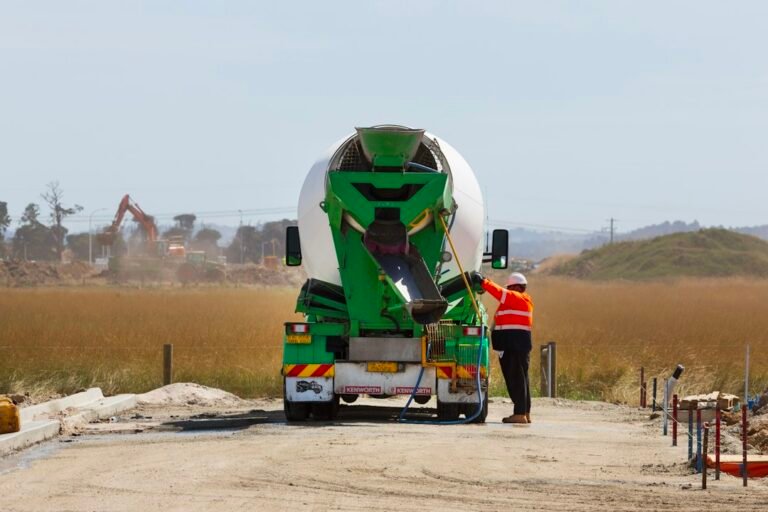
Pouring the wrong volume of concrete for footings wastes money, delays inspections, and can weaken a structure’s foundation. A reliable concrete footing calculator solves this problem by turning your hole or trench dimensions into an exact cubic yard, cubic foot, or bag count.
Whether you’re setting deck posts, fence lines, or continuous strip footings for a garage slab, getting this math right the first time protects your budget and your pour schedule. This guide breaks down the exact formulas engineers and concrete crews use every day.

[rank_math_toc]
What Is a Concrete Footing Calculator and Why It Matters
A concrete footing calculator is a simple tool that turns three site measurements — length, width or diameter, and depth — into a precise concrete volume. Instead of eyeballing bag counts, you get cubic feet, cubic yards, and even 60 lb or 80 lb bag totals in seconds.
Footings carry the entire structural load of a building down into stable soil, so under-pouring is never acceptable. Using a concrete footing calculator before you order ready-mix or premix bags prevents costly short-pours and emergency second deliveries.

Footing sizing should always reflect soil bearing capacity, local frost depth, and the load path above, in line with established concrete mix design standards. These factors shape the minimum dimensions your concrete footing calculator inputs should never fall below.
Both DIY homeowners and professional crews rely on a concrete footing calculator to avoid disputes with inspectors over under-poured footings. Contractors also use it to quote materials accurately before bidding a job.
How Much Concrete for Footings: A Step-by-Step Sizing Guide
Knowing how much concrete for footings you need starts with accurate on-site measurements. Measure hole depth from the bottom of the excavation to grade, and measure width or diameter at the widest point.

You’ll also want a tape measure, string line, and a notepad to record each footing’s dimensions before running any numbers. Consistent units — all in feet or all in inches — prevent calculation errors later.
Many builders jump straight to a concrete footing calculator app, but understanding the manual math helps you double-check any output. Always round dimensions up slightly to cover irregular hand-dug holes or uneven trench walls.
Using a Concrete Footing Calculator for Post Hole Volumes
For round post holes, a concrete footing calculator applies the cylinder volume formula: pi × radius² × depth, all measured in feet. Divide the result by 27 to convert cubic feet into cubic yards.
Example: a 12-inch diameter hole (0.5 ft radius) that’s 3 feet deep needs about 2.36 cubic feet, or roughly 0.09 cubic yards, per post. Multiply that figure by your total post count to get the full order quantity.
A wider 18-inch diameter hole at the same 3-foot depth jumps to roughly 5.3 cubic feet, nearly 0.2 cubic yards. Small diameter changes compound quickly across a multi-post fence line.
Continuous Footing Concrete Formula for Trenches
Continuous footing concrete uses a simpler rectangular formula: length × width × depth, all in feet, then divided by 27 for cubic yards. This applies to strip footings, fence lines, and foundation walls alike.
A 40-foot-long footing that’s 1.5 feet wide and 1 foot deep requires 60 cubic feet, or about 2.22 cubic yards of concrete. Add a waste factor before finalizing the order.
This continuous footing concrete formula is exactly what a concrete footing calculator automates for you, especially across footings with varying widths. Local frost-depth codes can also push required depth to 3 feet or more in cold climates, multiplying total volume.
Concrete Footing Calculator Formulas & Conversion Table
The table below shows how a concrete footing calculator converts common footing sizes into cubic yards, cubic feet, and standard 80 lb bag counts. Use it as a quick reference or to sanity-check any digital tool.
Bag yield can vary slightly by brand, but most 80 lb bags produce about 0.6 cubic feet of mixed concrete, while 60 lb bags yield roughly 0.45 cubic feet.
| Footing Type | Dimensions | Cubic Feet | Cubic Yards | 80 lb Bags |
|---|---|---|---|---|
| Round Post Hole | 12″ dia x 3 ft deep | 2.36 | 0.09 | 4 |
| Round Post Hole | 18″ dia x 3 ft deep | 5.30 | 0.20 | 9 |
| Round Post Hole | 24″ dia x 4 ft deep | 12.57 | 0.47 | 21 |
| Continuous Footing | 40 ft x 1.5 ft x 1 ft | 60.00 | 2.22 | 100 |
| Continuous Footing | 60 ft x 2 ft x 1 ft | 120.00 | 4.44 | 200 |
| Slab Edge Footing | 100 ft x 1 ft x 1 ft | 100.00 | 3.70 | 167 |
For larger continuous footing concrete pours, ready-mix delivery is almost always more economical than bagged concrete once you pass roughly 1 cubic yard. Below that threshold, bagged mix remains more practical and less wasteful.
Running these same figures through a concrete footing calculator confirms your bag or yardage count instantly, and you can use our free online concrete calculator to automate every step.
Post Hole Concrete Calculator: Sonotube, Bell Bottom & Bag Tips
A post hole concrete calculator needs to account for sonotube forms, which add a small volume loss from wall thickness. Bell-bottomed holes, common on deck footings, require an extra allowance at the base.
For bell-bottom footings, calculate the cylinder volume for the shaft, then add the frustum (cone-shaped) volume for the flared base separately. Most post hole concrete calculator tools let you enter both diameters and sum the totals automatically.
For a project with 8 deck posts, each needing about 0.09 cubic yards, total volume comes to roughly 0.75 cubic yards — enough to justify a small ready-mix minimum load in many regions.
Before finalizing a bulk concrete order, especially on multi-post deck or fence projects, verify your dimensions with our volume calculator to catch any measurement errors early.
Ready-Mix vs. Bagged Concrete for Footing Pours
Most ready-mix suppliers set a minimum order between 1 and 3 cubic yards, and short-load fees apply below that threshold. If your concrete footing calculator total falls under 1 yard, bagged concrete is typically the more economical choice.
Bagged concrete also offers better control for small, staged pours like individual post holes spread across several days. Ready-mix trucks, on the other hand, pour an entire continuous footing concrete run in one pass, reducing cold-joint risk.
Factor delivery distance and truck access into your decision too; tight urban lots or steep driveways sometimes make bagged mix the only practical option regardless of total volume.
Common Estimating Mistakes with Continuous Footing Concrete
The most frequent error is forgetting to add a waste factor to continuous footing concrete estimates, which leads to short pours mid-truck. Uneven trench bottoms and soil overdig commonly add 5–15% more volume than the plan drawings suggest.
Another common mistake is mixing units — entering inches where feet are expected inside a concrete footing calculator. Feeding correct, consistent units into every field avoids this pitfall entirely.
Skipping rebar and formwork clearance is a smaller oversight; steel and forms don’t reduce concrete volume much, but soil collapse during excavation does add real, unplanned waste.
Frequently Asked Questions
How much concrete do I need for a single post hole footing?
For a typical 12-inch diameter hole 3 feet deep, plan on roughly 2.4 cubic feet of concrete per post. Running the exact numbers through a concrete footing calculator prevents under-ordering on multi-post fence or deck jobs.
Should I use bags or ready-mix for continuous footing concrete?
Under about 1 cubic yard, bagged concrete is usually cheaper and easier to manage on small jobs. Above that volume, ready-mix trucks save labor time and reduce mixing inconsistency across a continuous footing concrete pour.
How much extra concrete should I order for waste?
Add a 5–10% waste allowance for post holes and 8–15% for hand-dug continuous trenches with irregular walls. This buffer, built into most concrete footing calculator tools, prevents costly short-pour delays.
Does frost depth change my footing concrete calculation?
Yes, frost depth requirements can significantly increase footing depth in cold climates, sometimes doubling the concrete volume compared to a frost-free region. Always check local building codes before finalizing your concrete footing calculator inputs.
Accurate concrete footing calculator math is the difference between a smooth pour day and an expensive mid-job scramble. Measure carefully, add a sensible waste factor, and cross-check every number before the truck arrives so your next footing pour goes exactly as planned.
Bookmark this guide, keep your tape measure handy, and let the math — not guesswork — determine your next concrete order.